


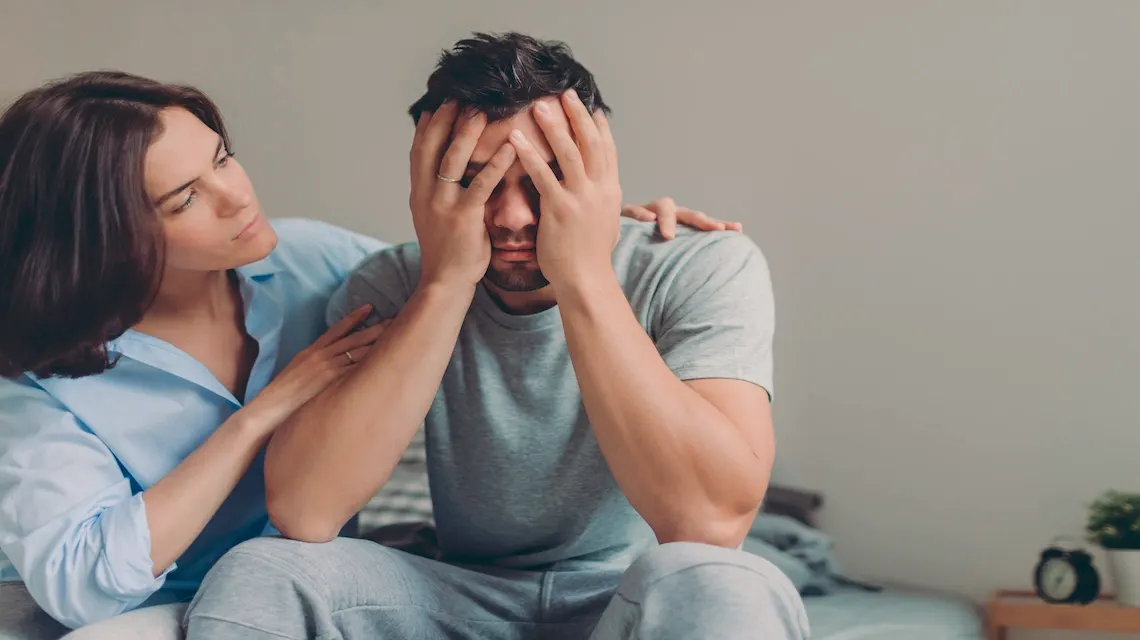

If you’ve had trouble getting or keeping an erection because you felt nervous, pressured, or “in your head,” you’re not alone. Erectile dysfunction due to performance anxiety is common, especially during new relationships, after a stressful week, or following one awkward experience that won’t stop replaying in your mind.
The good news is that this kind of ED is often treatable. Nothing is “broken.” Your body is usually doing what bodies do under stress, it shifts into protection mode instead of pleasure mode.
This guide explains why anxiety can interrupt arousal, how the worry cycle keeps going, practical steps you can try at home this week, and when it’s smart to get medical help so you can rule out physical causes and feel more confident.
Why performance anxiety can cause erectile dysfunction
Performance anxiety is like trying to fall asleep while checking the clock every two minutes. The harder you try to force it, the more awake you feel. Sex can work the same way: when you’re focused on results, your body often stops cooperating.
This doesn’t mean you’re not attracted to your partner. It means your stress response is loud.
For a helpful overview of how anxiety affects sexual response, see Stress, anxiety and sexual performance in men.
The anxiety-erection cycle, how fear turns off arousal
An erection depends on relaxation, attention, and good blood flow. Anxiety does the opposite.
When you feel pressure, your brain can interpret it as a threat, even if you want the situation. Stress chemicals rise, adrenaline increases, your heart rate speeds up, and muscles tense. Blood flow tends to prioritize “action” muscles rather than the areas needed for arousal. That shift alone can make erections less reliable.
Then the mental loop kicks in:
- You start checking your body for signs it’s working.
- You try to force arousal.
- A negative thought shows up (“What if it happens again?”).
- Your anxiety spikes, and your body shuts down more.
Many people notice they still have morning erections or erections during masturbation, yet struggle during partnered sex. That pattern can be a clue that anxiety, not a circulation problem, is playing a major role.
Common triggers and hidden pressures that raise performance anxiety
Performance anxiety rarely comes from nowhere. It’s usually built from small pressures that pile up.
Common triggers include:
New partner energy: You want to impress them, and the stakes feel high.
One bad night: A single erection problem turns into a fear of a repeat.
Porn expectations: Comparing real sex to edited fantasy can create unfair standards.
Fear factors: Worry about pregnancy, STIs, or being judged.
Alcohol use: A drink might lower inhibitions, too much often hurts erections.
Fatigue and stress: Sleep debt, work pressure, parenting, burnout.
Mood and mental health: Anxiety and depression can lower desire and distract focus.
Relationship tension: Unspoken conflict makes it hard to feel safe and present.
ED can also be situational, meaning it happens only in certain settings or with certain partners. It’s still real, and it still deserves care.
For more on how sexual performance anxiety shows up and what can feed it, this overview is useful: Overcoming Sexual Performance Anxiety.
How to stop erectile dysfunction due to performance anxiety, practical steps that work
You don’t “fix” performance anxiety by trying harder. You loosen the pressure, retrain your attention, and create conditions where arousal can happen on its own.
Think of it like coaxing a shy cat out from under the bed. Loud chasing won’t work. Patience will.
Reset your focus, take the goal off erections and back on connection
A big shift is moving from “I must perform” to “Let’s enjoy what feels good.” This is not giving up, it’s changing the rules so your nervous system can relax.
Try “no-goal intimacy” for a week or two:
- Kissing, touching, and exploring, without checking for an erection
- Oral sex (if you both want it)
- Mutual masturbation
- Cuddling with skin-to-skin contact
If you’re partnered, agree on a simple pause word like “slow,” “reset,” or “water break.” That creates permission to stop, breathe, and restart without it feeling like failure.
One helpful mindset: you’re not trying to produce a perfect outcome, you’re building a positive pattern of closeness. Erections often follow when the pressure drops.
Calm the body fast, simple techniques before and during intimacy
When anxiety hits, your body needs a quick “all clear” signal. Pick one tool and practice it outside the bedroom first, so it feels familiar.
1) Slow breathing (60 seconds)
Inhale through your nose for 4 counts, exhale for 6 counts. Longer exhales tell your nervous system to downshift.
2) Grounding (30 seconds)
Silently name 5 things you see. It pulls attention away from mental spirals and back to the room.
3) Progressive muscle release (90 seconds)
Tense your thighs and glutes for 5 seconds, then relax. Repeat once. Many people hold tension there without noticing.
4) A short reset break
Get water, use the bathroom, wash your hands, then come back. Treat it like a normal pause, not a crisis.
A note on alcohol: small amounts can reduce nerves for some people, but it’s easy to overshoot. If erections are inconsistent, try a few alcohol-free attempts and compare results.
Don’t ignore basics that support confidence and blood flow: regular movement, decent sleep, and fewer late-night screens. They won’t solve everything, but they make anxiety easier to manage.
For more practical coping ideas, see How to Overcome Sexual Performance Anxiety: Tips and Tools.
Talk about it without killing the mood, what to say to a partner
Silence makes performance anxiety bigger. A short, calm statement often shrinks it fast.
Here are simple scripts you can use:
- “I’m really into you. My body gets nervous sometimes. Can we slow down?”
- “I want this. If I get in my head, I might need a quick reset.”
- “Can we focus on kissing and touching for a bit? That helps me relax.”
- “I like you a lot. Pressure makes me freeze. Patience helps.”
If you’re the partner, your role matters more than you think:
What helps: reassurance, warmth, staying playful, praising effort.
What doesn’t: teasing, eye-rolling, checking in every minute (“Are you hard yet?”), treating it like a test.
Honest communication can turn a tense moment into teamwork, which is often the fastest anxiety relief.
When to get help, medical checks, therapy, and treatment options
Performance anxiety and physical factors can overlap. Even if you’re pretty sure it’s nerves, a checkup can reduce worry and catch issues early. ED is also sometimes linked with general health problems, so it’s worth taking seriously.
For an evidence-based overview of ED symptoms and causes, see Mayo Clinic’s erectile dysfunction guide.
Signs it is more than nerves, and what a doctor may check
Consider a medical visit if any of these fit:
- ED happens most times for 3 months or longer
- You rarely have morning erections
- There’s pain, curvature, or trouble with ejaculation
- Desire drops sharply
- You have diabetes, high blood pressure, heart disease, or sleep apnea
- You started a new medication (some antidepressants and blood pressure meds can affect erections)
- You smoke, vape heavily, or drink heavily
A clinician may review your health history, check blood pressure, and order labs like blood sugar, cholesterol, and sometimes testosterone, depending on symptoms.
What treatments can help, from sex therapy to ED medication
If anxiety is the main driver, therapy can help a lot. Common options include:
Sex therapy: targets performance pressure, avoidance, and confidence.
Cognitive behavioral therapy (CBT): helps change the worry scripts and attention habits.
Couples counseling: improves communication and lowers tension in the relationship.
Anxiety or depression treatment: when mood is part of the pattern.
Some men also use PDE5 medications like sildenafil or tadalafil. These don’t create desire, but they can improve reliability, which lowers pressure. That can make it easier to practice new skills and rebuild trust in your body.
Safety matters: don’t mix these meds with nitrates, and get them from a licensed clinician, not from unregulated sources. Medication can be a bridge, not the whole plan.
Conclusion
Erectile dysfunction due to performance anxiety is your body reacting to pressure, not a verdict on your masculinity or your attraction. The cycle is real, but it can be broken by changing the goal, calming your nervous system, and talking openly with a partner.
Pick one small step to try this week, like the 4-in, 6-out breathing pattern or a no-goal intimacy night. If problems keep showing up, schedule a checkup and consider therapy. Support is available, and most people improve a lot once shame and silence are off the table.
Erectile Dysfunction Due to Performance Anxiety FAQs:
What’s the difference between performance anxiety ED and physical ED?
Performance anxiety ED is usually situational, meaning erections may be firm during masturbation, sleep, or with a different partner, but less reliable during partnered sex when pressure is high. Physical ED tends to be more consistent across situations and may be linked to blood flow, nerve function, hormones, or certain medications.
That said, both can overlap. Worry can make a physical issue worse, and a physical hiccup can trigger anxiety.
Can performance anxiety really stop an erection even if I’m attracted to my partner?
Yes. An erection depends on the “rest and relax” side of your nervous system. Anxiety shifts the body into a stress response (faster heart rate, tense muscles, racing thoughts), which can reduce arousal signals and blood flow needed for an erection.
Attraction and desire can be there, but anxiety can still interrupt the body’s response.
How can I tell if my ED is mainly anxiety-related?
No single sign proves it, but these patterns often point to anxiety playing a big role:
- You can get erections when alone (masturbation) or you wake up with erections.
- The problem comes and goes, especially with a new partner or after a “bad” experience.
- You notice a loop of worry, checking, or trying to “force” an erection.
- It’s worse when you feel rushed, pressured, or focused on performance.
If erections are rarely happening in any setting, or you’ve lost morning erections over time, it’s smart to get a medical checkup.
Is this common, and does it go away?
It’s common. Performance anxiety can affect men of any age, including those with no health problems. It often improves when the pressure comes down and confidence returns, but it can stick around if the worry becomes a habit.
Many people see real improvement with simple changes (communication, taking penetration off the table for a bit, better sleep) and, when needed, therapy or medication.
What can I do in the moment if I start losing my erection?
The goal is to lower pressure and get back into your body, not your thoughts.
- Slow the pace: take a break, change positions, or shift to kissing or oral.
- Stop “monitoring”: checking firmness usually makes it worse.
- Breathe on purpose: slow, steady breaths can reduce the stress response.
- Name it simply: a calm line like, “I’m in my head, give me a minute,” can cut the tension.
If penetration feels like a pass or fail test, agree ahead of time that sex can still be satisfying without it.
Should I talk to my partner about it, and what do I say?
Yes, if you feel safe doing so. Keeping it secret often increases pressure. You don’t need a big speech. Try something clear and kind:
Example: “Sometimes I get anxious and my body doesn’t cooperate. I’m attracted to you, I just get in my head. If it happens, I’d rather slow down and keep things fun than push through.”
Good partners usually want to help, they just need context.
Do ED medications help with performance anxiety?
They can. Medications like sildenafil (Viagra) and tadalafil (Cialis) can make erections easier to get and keep, which may reduce fear of failure. They don’t treat anxiety directly, but they can break the cycle for some people.
A clinician can help you decide what’s safe based on your health and any medications you take. Don’t mix ED meds with nitrates (used for chest pain), and be careful with heavy alcohol use, which can make erections harder to maintain.
When should I see a doctor or therapist?
Consider medical care if:
- ED is new and persistent (for example, most of the time for several weeks or longer).
- You rarely have morning or nighttime erections.
- You have pain, penile curvature, urinary symptoms, or trouble with ejaculation.
- You have diabetes, high blood pressure, high cholesterol, sleep apnea, or you smoke.
- You started a new medication and timing lines up.
Consider a sex therapist or anxiety-focused therapist if worry is driving the problem, you avoid sex, or it’s hurting your relationship. Therapy can help with performance pressure, negative thoughts, and confidence, often with practical exercises you can use right away.