



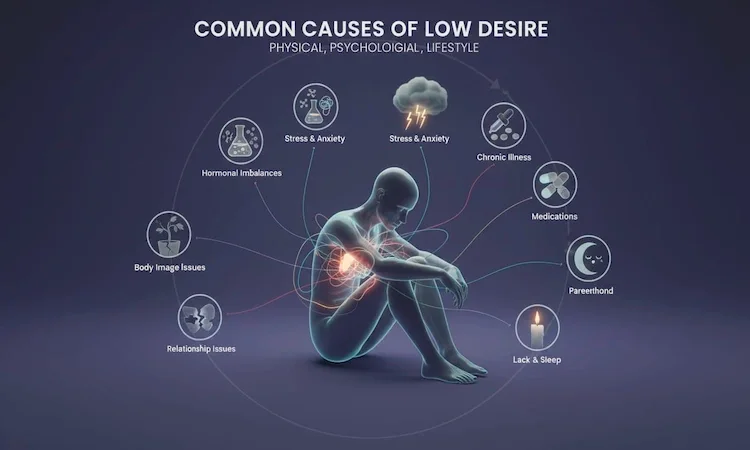
Some days, desire feels easy, like a light that switches on. Other times, it’s dim or missing, even when you care about your partner (or you’d like to care, but you just don’t feel it). Common Causes of Low Desire include everything from stress and sleep loss to hormones, health conditions, and relationship tension, and it’s normal for more than one factor to show up at the same time.
Low desire can mean less interest in sex, less interest in physical affection, or less interest in emotional connection. It can happen in any gender, any orientation, and in both new and long-term relationships. It’s not a character flaw, and it doesn’t mean your relationship is “doomed.”
This post covers common causes and practical next steps, not blame. If your desire drops suddenly, feels severe, or comes with pain, bleeding, or major mood changes, schedule medical care promptly.
Body and brain causes of low desire
Desire isn’t just “in your head” or “in your body.” It’s a teamwork problem. Your brain needs a sense of safety and reward, and your body needs enough energy and comfort to respond. When either side is struggling, desire often fades.
Many causes are treatable. A clinician can help you sort out what’s going on, especially if the change is new, intense, or affecting your well-being. Reliable overviews like the Mayo Clinic’s guide to low sex drive in women can help you see how wide the range of causes really is.
Hormones, health conditions, and life stages that change desire
Hormones help regulate energy, mood, sleep, and physical comfort, all of which shape desire. A few common examples:
- Thyroid problems can leave you tired, foggy, and less interested in intimacy.
- Low testosterone (in any gender) may affect sexual thoughts and responsiveness.
- Perimenopause and menopause can bring sleep disruption, hot flashes, vaginal dryness, and shifts in mood that make intimacy feel like work.
- Postpartum changes are a perfect storm: healing, sleep loss, new responsibilities, and shifting hormones. Breastfeeding can lower estrogen and increase dryness or discomfort for some people.
- PCOS can affect hormones, body image, and mood, which can all affect desire.
- Diabetes can impact blood flow, nerve function, and energy levels.
- Chronic pain makes the body cautious. It’s hard to want touch when your nervous system expects discomfort.
- Sleep apnea can drain energy and reduce libido, even if you think you’re “sleeping enough.”
When should you consider labs? If your low desire is new, lasts more than a few months, or comes with other changes (fatigue, hair loss, irregular periods, erectile issues, hot flashes, unexplained weight changes), ask a clinician whether checking thyroid, iron, glucose/A1C, and sex hormones makes sense. Sudden shifts matter because they can signal a medical change that’s easier to treat early.
Mental health, stress, and medications that can lower libido
Stress is like running too many apps at once. Your brain is busy scanning for what could go wrong, and desire usually isn’t high on the priority list.
- Anxiety can bring racing thoughts, tension, and a “can’t relax” feeling.
- Depression can flatten pleasure and motivation, including sexual interest.
- Burnout often looks like numbness. You’re not avoiding intimacy on purpose, you’re depleted.
- Performance pressure can turn closeness into a test. Intrusive thoughts (Am I taking too long? Do I look okay? What if I can’t get aroused?) push the nervous system into self-protection instead of connection.
Medications can also play a role. Common ones include SSRIs and other antidepressants, some hormonal birth control, certain blood pressure medications, and opioids. If you suspect a medication effect, don’t stop on your own. Talk to the prescriber about options like a dose adjustment, timing changes, switching meds, or adding strategies to reduce side effects. For a broad medical overview of possible causes, the NHS page on loss of libido is a helpful reference point.
Relationship and emotional reasons desire drops
Desire often follows connection. When closeness feels tense, unfair, or unsafe, the body can respond by shutting down interest. This isn’t about “fault.” It’s about signals. If your nervous system reads the relationship as stressful, desire may not show up, even if love is present.
This can happen in long-term relationships and dating. In newer situations, uncertainty or mixed signals can create anxiety. In long-term partnerships, daily friction can pile up until intimacy feels like one more demand.
Disconnection, resentment, and unresolved conflict
Resentment is a quiet desire killer. It grows when needs go unmet and nothing changes. You might notice:
- Avoiding touch because it feels like it will “lead to something”
- Feeling tense when your partner is affectionate
- Keeping score about effort, chores, or emotional labor
- Going numb, then feeling guilty about being numb
Small repairs add up. Two simple ideas that help many couples:
Weekly check-ins: 15 minutes, phones away. Each person answers: “What felt good this week?” and “What felt hard?” Keep it short and specific.
Fair chore splits: Not just tasks, but the mental load (planning, remembering, scheduling). When one person feels like the household manager, desire often drops because the relationship starts to feel like parent-child, not partner-partner.
In conflict, try “I feel” statements instead of prosecutions. “I feel lonely when we don’t talk at night” lands differently than “You never make time for me.”
Trust issues, body image, and past experiences
Trust breaks can freeze desire fast. Lying, cheating, hidden spending, secret messaging, or repeated boundary crossings can make intimacy feel unsafe. Even if the relationship continues, your body may keep the memory.
Body image matters too. Feeling judged (or judging yourself) about weight changes, aging, scars, hair loss, or postpartum changes can make it hard to relax. If you’re bracing for criticism, you’re not available for pleasure.
Past sexual trauma can also affect desire, sometimes years later. Triggers don’t always announce themselves. They can show up as numbness, irritation, shutdown, or sudden anxiety during otherwise “normal” moments.
Support options can be practical and respectful:
- Individual counseling to work on anxiety, depression, or self-image
- Couples therapy to rebuild safety and improve communication
- Trauma-informed therapy to address triggers without forcing exposure
Consent-focused pacing helps. That can mean agreeing that affection doesn’t have to “go anywhere,” and that stopping is always okay.
Lifestyle and environment factors that quietly kill desire
Sometimes it’s not one big problem. It’s a stack of small ones. Like trying to light a match in the wind, each daily stressor blows out the spark.
Lifestyle factors matter because desire needs space, time, and a nervous system that isn’t overloaded.
Sleep loss, exhaustion, and nonstop responsibilities
Poor sleep lowers mood and patience, and it can disrupt hormones tied to desire. Parenting, caregiving, shift work, and long commutes can drain you before intimacy even has a chance.
A few realistic fixes:
Protect a sleep window: Pick a bedtime range and treat it like an appointment.
Plan micro-breaks: Ten minutes of quiet can reset your brain more than an hour of scrolling.
Use shared calendars: It reduces last-minute surprises and the “why didn’t you tell me?” fights.
Lower evening expectations: If nights are chaos, build connection earlier in the day with a walk, a hug that lasts 20 seconds, or a check-in over coffee.
Alcohol, substances, and overstimulation from porn or social media
Alcohol can lower inhibition in the moment, but frequent drinking can worsen sleep and mood, and it can hurt sexual function over time. Cannabis and other substances can affect desire differently by person, sometimes increasing relaxation, sometimes reducing motivation or responsiveness.
Overstimulation matters too. For some people, frequent porn use or constant doomscrolling trains the brain toward quick novelty and away from slower, real-life connection. If real intimacy starts to feel “less interesting,” it doesn’t mean something is wrong with you. It may mean your attention system is tired.
A simple experiment: try a 2-week reset. Reduce porn and late-night scrolling, then focus on low-pressure touch, novelty (a new setting, music, a shower together), and connection without a goal.
Conclusion
Low desire rarely has one single cause. Most Common Causes of Low Desire fall into three buckets: body and brain factors, relationship and emotional factors, and lifestyle and environment factors. For many people, it’s a mix.
A simple next-step plan helps: track patterns for two weeks (sleep, stress, meds, conflicts), talk with your partner using calm, specific language, schedule a checkup to rule out health issues, and consider counseling if you feel stuck. Support exists, and improvement is possible, even if it’s been a while.