




If erections have felt less firm lately, it’s easy to assume it’s all about blood flow or hormones. Those matter, but there’s another piece that often gets missed: the pelvic floor. These small muscles sit at the base of your pelvis and help support erection hardness by boosting pressure and improving control.
Pelvic floor exercises for stronger erections can help many men improve firmness, stamina, and orgasm control, especially when weakness is part of the problem. They’re not an instant fix, and they don’t replace medical care for sudden or severe erectile dysfunction.
This guide will show you how to find the right muscles, do the exercises with good form (without tensing everything else), and follow a simple plan for the next few weeks.
How pelvic floor muscles affect erection strength
Think of an erection like filling a hose with water and then pinching it just enough to keep pressure high. Blood flow turns you on, but pressure and “seal” help you stay hard. That’s where the pelvic floor comes in.
Two key muscles matter most for erection quality:
- Bulbocavernosus (BC): This muscle wraps around the base of the penis and the bulb of the urethra. During sex, it helps with rhythmic contractions linked to orgasm and ejaculation. It also plays a role in pushing out the last drops of urine and semen.
- Ischiocavernosus (IC): This muscle sits along the erectile bodies (the crura) near the base of the penis. When it contracts, it helps compress veins and supports the “trapping” of blood in the penis, which can help maintain firmness.
During an erection, arteries bring blood in, and veins carry blood out. A strong pelvic floor can support erection hardness by helping reduce venous outflow (blood leaving too quickly). That matters if your main issue is “I can get hard, but I can’t keep it.”
Stronger pelvic floor muscles may also improve control in a practical way. Many men notice better timing and a stronger “build” toward orgasm when the muscles that coordinate ejaculation and sensation are working well. Research reviews have explored pelvic floor rehab as a tool for male sexual function, including erection quality and ejaculation control, as summarized in sources like this PubMed narrative review: The Effect of Pelvic Floor Rehabilitation on Males with Sexual Dysfunction and this systematic review listing benefits across studies: Pelvic floor muscle training improves erectile dysfunction and premature ejaculation.
So why do these muscles get weak? Usually it’s not one dramatic event. It’s slow wear and tear from habits and strain, such as:
- Lots of sitting (and poor posture)
- Weight gain (more pressure on the pelvic floor)
- Aging (muscle tone and nerve function can change)
- Prostate surgery (muscle coordination and nerve pathways may be affected)
- Chronic coughing (repeated pressure spikes)
- Constipation and straining
- Heavy lifting with poor bracing (bearing down hard)
The encouraging part is that muscles often respond well to consistent training, as long as you’re training the right thing.
Signs your pelvic floor may be weak (and when it might be too tight)
Weakness often shows up as “leaks” in control, not just in erections.
Common signs of a weak pelvic floor include:
- Trouble keeping an erection firm, especially when changing positions
- Dribbling after you think you’re done peeing
- A weak urine stream
- Needing to strain to finish urinating
- Less control around orgasm (finishing sooner than you want, or difficulty “holding back”)
But there’s another possibility: the pelvic floor can be overactive or too tight. Tight muscles aren’t strong in a useful way, they’re tense and fatigued.
Signs of tightness can include pelvic aching, pain with sex, testicle or perineum discomfort, or trouble starting urine. If that sounds like you, you may need relaxation and breathing work as much as strengthening. Sometimes doing endless Kegels makes it worse.
Find the right muscles and do pelvic floor exercises the right way
Most men don’t fail at pelvic floor work because they’re lazy. They fail because they’re squeezing the wrong muscles, or squeezing so hard that everything else joins in.
The goal is a clean pelvic floor contraction, not a full-body clench.
Form cues that make the exercises work better:
- Breathe normally. Don’t hold your breath. If your face turns red, you’re doing a “bearing down” move, not a lift.
- Keep your belly soft. Don’t suck in your stomach like you’re bracing for a punch.
- Relax your glutes and inner thighs. If your butt cheeks tighten, reduce effort.
- Think “lift,” not “push.” Pushing down can strain the area and may worsen tightness.
- Stop if there’s pain. Pelvic floor work should feel like effort, not sharp pain in the pelvis, testicles, penis, or low back.
A useful intensity target is about 30 to 60 percent effort at first. You should be able to release fully after each squeeze. Full relaxation between reps is not optional, it’s part of the rep.
Also, resist the urge to do 200 reps in one day. Muscles respond to practice plus recovery. Consistency beats volume. A small routine done almost daily is better than a huge session once a week.
How to identify your pelvic floor muscles (simple tests that do not become a habit)
Use these as “finders,” not as workouts.
1) The “stop gas” feeling
Imagine you’re trying to stop yourself from passing gas in a quiet room. That gentle lift and close is your pelvic floor.
2) The lift at the base of the penis
When you contract correctly, you may notice a subtle lift at the base of the penis and a drawing in of the scrotum. It’s slight, not dramatic.
3) The one-time pee test (just once)
While urinating, briefly try to stop the flow midstream, then let it continue. This can help you identify the right muscles, but don’t make it your training method. Regularly stopping urine midstream can irritate the bladder and teach poor coordination.
After each squeeze, let the muscles fully drop and soften. If you can’t feel a “release,” you’re likely holding tension all day without realizing it.
Best pelvic floor exercises for stronger erections (step by step)
You only need a few core moves. Do them well.
1) Slow Kegels (strength and control)
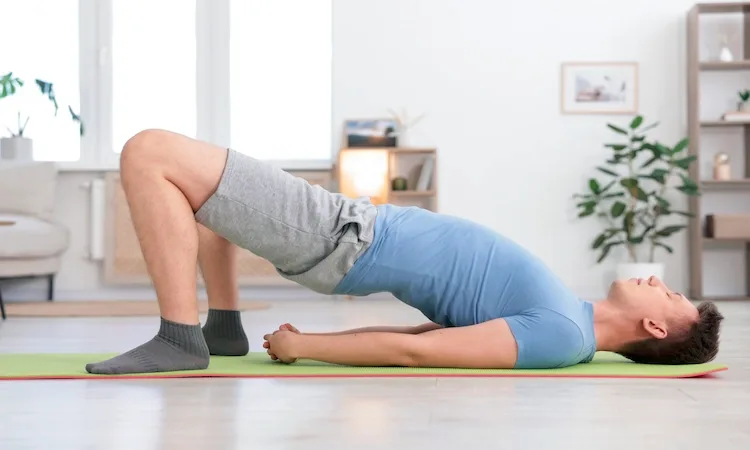
- Sit or lie down with your ribs stacked over your pelvis.
- Inhale, let your belly expand gently.
- Exhale, then lift the pelvic floor (like stopping gas).
- Hold for 3 to 5 seconds.
- Release completely for 5 to 8 seconds.
2) Quick flicks (responsiveness)
These train fast, clean on-off control without bracing.
- Lift for 1 second.
- Fully relax for 1 second.
- Repeat for a short set. Quality matters more than speed.
3) Endurance holds (staying power)
This is your “keep the pressure” skill.
- Lift at a moderate effort.
- Hold 6 to 10 seconds.
- Release fully for 10 to 15 seconds.
Add a balance tool: reverse Kegels (relaxation)
If you feel tight, sore, or “stuck,” add pelvic floor relaxation.
- Inhale into your belly and sides.
- Let the pelvic floor soften and widen, like gently letting go.
- No pushing, no strain, just a release.
Common mistakes and quick fixes:
- Clenching butt cheeks: lower the effort, try lying down first.
- Sucking in the stomach: place a hand on your belly and keep it soft.
- Holding your breath: count out loud during holds to stay breathing.
- Pushing down: think “elevator up,” not “bearing down.”
If you want a deeper look at how pelvic physical therapy is used for male sexual concerns, this review provides context: Pelvic physical therapy for male sexual disorders: a narrative review.
A simple 6-week routine to build erection support and control
The best routine is the one you’ll actually do. Aim for 5 to 10 minutes in the morning and again in the evening, most days of the week. Stop short of fatigue. Your last rep should look like your first rep.
Many men notice small changes in 2 to 4 weeks, like better control, less dribbling, or improved firmness during certain positions. Stronger, more reliable changes often show up by 6 to 12 weeks, especially when lifestyle habits support blood flow and nerve health.
Tracking helps you stay honest without obsessing. Once a week, jot down quick notes:
- Erection firmness (morning, solo, partnered)
- Stamina and control
- Any urinary changes (drips, stream strength)
- Any pelvic tension or soreness
Weekly plan you can do at home (morning and evening, 5 to 10 minutes)
Use this as a simple progression. Always fully relax between reps and keep breathing.
| Weeks | Slow Kegels | Quick flicks | Endurance holds | Relaxation (reverse Kegels or breathing) |
|---|---|---|---|---|
| 1 to 2 | 2 sets of 6 reps, hold 3 seconds | 1 set of 10 reps | 3 reps, hold 6 seconds | 3 slow breaths after each set |
| 3 to 4 | 2 sets of 8 reps, hold 4 seconds | 2 sets of 10 reps | 4 reps, hold 8 seconds | 4 to 5 slow breaths total |
| 5 to 6 | 3 sets of 8 reps, hold 5 seconds | 2 sets of 15 reps | 5 reps, hold 10 seconds | 1 to 2 minutes of breathing |
Do this morning and evening, 5 days per week. Take 2 rest days, or do only relaxation on those days.
Busy day minimum (still counts):
Do 1 set of slow Kegels (6 reps) plus 30 to 60 seconds of relaxation breathing. Keep the streak alive.
If you’re also dealing with both erection issues and early finishing, there’s research specifically looking at pelvic floor rehab for those combined problems, including this PubMed entry: Pelvic-floor muscle rehabilitation in erectile dysfunction and premature ejaculation.
Lifestyle habits that make pelvic floor work better
Pelvic floor training helps the “mechanics,” but erections also depend on blood vessels, nerves, and hormone balance. A few basic habits make your exercise time pay off.
Walking or basic strength training: Improves circulation and supports nitric oxide function, which matters for erection quality.
Healthy weight: Less abdominal pressure on the pelvic floor, better vascular health.
Sleep: Poor sleep can blunt libido and hormone rhythm, and it raises stress hormones.
Hydration and fiber: Constipation and straining can weaken or irritate pelvic floor muscles.
Limit heavy straining on the toilet: If you’re pushing hard, change the setup (footstool, time limit, more fiber).
Manage stress: Stress often shows up as pelvic tension and shallow breathing.
Cut back on smoking and heavy drinking: Both can affect blood flow and nerve signaling.
None of this needs perfection. It’s about giving your body fewer reasons to struggle.
Safety tips, expectations, and when to talk to a doctor
Pelvic floor exercises should feel controlled and steady. They should not cause pain.
Keep these safety rules in mind:
- No sharp pain in the pelvis, penis, testicles, groin, or low back.
- Avoid overtraining. If the area feels sore, cramped, or “wired,” reduce reps and add relaxation breathing for a few days.
- Don’t do Kegels while peeing as a regular practice. Use the midstream stop only once to find the muscles, then train at other times.
- Stop short of fatigue. Shaky, messy reps teach poor coordination and can increase tension.
Also set realistic expectations. Pelvic floor work can improve firmness and control, but erections are still a whole-body event. If the root cause is vascular disease, medication side effects, or low testosterone, exercises may help but won’t fully solve it.
Talk to a clinician if you notice:
- Sudden erection problems that don’t improve
- Chest pain or shortness of breath with sexual activity
- Numbness in the groin or new weakness
- Severe pelvic pain
- Blood in urine
- Symptoms that could point to low testosterone (low libido, fatigue, reduced morning erections)
Pelvic floor physical therapy is also worth considering, especially if you suspect tightness or pain, not just weakness. For a starting point on the evidence base, see: Pelvic floor exercises for erectile dysfunction.
Conclusion
Pelvic floor exercises for stronger erections work because they support pressure, blood trapping, and control at the base of the penis. Done with good form, they can improve firmness and stamina over time, especially when weakness is part of the picture. Start small, stay consistent, and remember that relaxation is part of training, not an extra.
Follow the 6-week plan, track changes once a week, and adjust effort so you never push into pain or fatigue. If erection changes are sudden, severe, or not improving, it’s smart to talk with a clinician and consider pelvic floor physical therapy.