




If you’ve ever noticed your erection fade right when you want it most, you’re not alone. For many men, it’s not a “lack of desire” problem, it’s a stress response problem. Your breathing is one of the fastest ways to change that response in real time.
Breathing for staying hard longer works because breath affects three big things at once: stress (and performance anxiety), blood flow, and where your attention goes. When you breathe in a calmer way, your body gets the message that it’s safe to stay aroused instead of switching into alarm mode.
This is common, and it’s often fixable with simple habits. That said, erections can also be affected by medical causes, medications, sleep issues, or heart and blood sugar problems. If erection changes are frequent, sudden, or worrying, talk to a clinician.
Why breathing can help you stay hard longer
An erection is a body-wide event. Your brain has to feel relaxed enough to stay interested, your blood vessels need to open, and your muscles can’t be locked up with tension. Breathing sits right in the middle of all three.
When you’re calm, your nervous system favors “rest and connect” mode. Heart rate steadies, blood vessels relax, and touch tends to feel better. When you’re anxious, your body flips toward “fight or flight.” That can be useful for running from danger, but it’s a lousy setting for sexual performance.
Breathing is like the volume knob on this system. You don’t need perfect technique. You just need a pattern that tells your body, “slow down, I’ve got time.”
A quick example: imagine you’re kissing, things heat up, and you catch yourself holding your breath without meaning to. Or you start breathing fast in your chest. In that moment, your shoulders lift, your jaw tightens, and your mind starts scanning for problems (Am I taking too long? Am I losing it?). That mix of tension and adrenaline can make erections less steady and less reliable.
Stress breathing vs calm breathing: fight or flight can shut things down
Performance anxiety often shows up as shallow chest breathing, sighing, or breath holding. That style of breathing tends to pair with adrenaline, a faster pulse, and a mind that won’t stop judging the moment.
Adrenaline is the same chemical that helps you react quickly, but it can also pull attention away from pleasure and into “monitoring.” You may start checking your erection, trying to force arousal, or rushing to “prove” things are working. That pressure can interrupt the mental and physical conditions that support a firm erection.
Calming the breath signals safety. A longer, softer exhale is one of the simplest ways to cue your nervous system to downshift. The Sexual Medicine Society of North America has also discussed how diaphragmatic breathing can support sexual concerns like timing and control (see Diaphragmatic Breathing May Help with Premature Ejaculation Treatments).
Breathing, blood flow, and pelvic tension: how tight muscles get in the way
A lot of men tense up without noticing. Common spots: jaw, neck, abs, glutes, and the pelvic floor. This often happens when you strain, hold your breath, or try to “perform” through intensity.
Tension can steal sensation and make arousal feel brittle. It can also create a push-pull problem: you’re mentally trying to relax while your body is clenching like it’s bracing for impact. A steadier breath, especially a longer exhale, helps your muscles soften. When the belly relaxes, the pelvic floor often follows.
Think of it like trying to drink through a straw while someone is pinching it. You might still get some flow, but it’s inconsistent. Relaxing tension doesn’t guarantee perfection, but it gives your body better conditions to respond.
Breathing for staying hard longer: simple techniques you can use tonight
These are not “magic counts.” They’re simple patterns you can repeat, then adjust. The goal is comfort, steadiness, and staying connected to your partner. If anything makes you lightheaded, stop and return to normal breathing.
Use these in four moments:
- Before sex to reduce nerves and get present.
- During sex to avoid breath holding and tension spikes.
- When you feel yourself losing your erection to calm the body quickly.
- After orgasm to reset and recover (also helpful if you’re going again later).
There’s research interest in diaphragmatic breathing for sexual function and control, including clinical work published in The Journal of Sexual Medicine (see The effects of diaphragmatic breathing exercises on individuals with premature ejaculation). You don’t need to read the paper to benefit, but it’s reassuring that this isn’t just internet folklore.
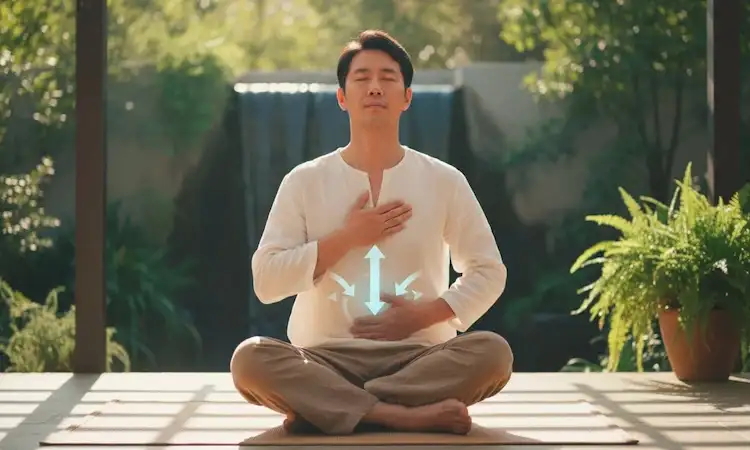
The 1 minute reset before sex (slow exhale breathing)
Do this when you’re getting ready, in the bathroom, or during foreplay. It’s quiet and doesn’t draw attention.
- Inhale through your nose for 3 to 4 seconds.
- Exhale gently for 5 to 7 seconds (don’t force it).
- Repeat for about 60 seconds.
Cues that make it work better:
- Let your shoulders drop on the exhale.
- Keep your jaw unclenched, teeth slightly apart.
- Let your belly be soft (no bracing).
Why it helps: longer exhales tend to calm the nervous system and reduce “rush” energy. You’re setting a pace your body can maintain.
Stay present during sex with synchronized breathing and soft belly breaths
During sex, many men unknowingly switch into “effort breathing,” short inhales, held breath, tight abs. That’s the fastest route to tension and distraction.
Try this instead:
- Keep your breath low and quiet, as if you’re trying not to fog a mirror.
- Match breathing to rhythm: one slow inhale, one slow exhale, even if movement speeds up.
- Breathe out during effort. If you notice yourself bracing, make the next exhale a little longer.
If it feels natural, you and your partner can breathe together for a few cycles. Not as a performance trick, more like syncing to the same song. It can pull your attention away from “How am I doing?” and back to what you’re actually feeling.
When you feel yourself getting close too fast: the downshift breath
This is for the moment you feel intensity spike and you want to last longer without going numb or disconnecting.
- Slow down or pause (communicate if needed).
- Inhale for 2 to 3 seconds through the nose.
- Exhale for 6 to 8 seconds, gentle and steady.
- Repeat for 3 to 5 breaths.
Focus cue: feel the air leaving your nose on the exhale. As you breathe out, imagine your pelvic floor “dropping” and widening, not clenching.
This works best when you catch the early wave, not when you’re already past the point of control. It’s like tapping the brakes before a sharp turn, not after.
Common mistakes, safety tips, and when to get help
Breathing exercises are simple, but it’s easy to overdo them. The point is to lower pressure, not add another job during sex. Also remember: breathing helps most when it’s paired with basics that support erections like sleep, movement, less alcohol, and managing anxiety.
If you want broader lifestyle ideas for circulation and erection support, Health.com has a practical overview (see Improve Blood Flow to the Penis With These 7 Tips).
Mistakes that make breathing backfire (and what to do instead)
Over-breathing: Big fast breaths can make you tingly or dizzy. Fix: take smaller breaths, slow the exhale, and pause the technique if you feel lightheaded.
Forcing huge inhales: That lifts the chest and adds tension. Fix: inhale softly through the nose and let the belly move naturally.
Breath holds to “power through”: This often tightens the pelvic floor and abs. Fix: breathe out during effort and keep the breath moving.
Trying to control everything: If you treat breathing like a test, anxiety climbs. Fix: aim for “a little calmer than before,” not perfect counts.
When breathing is not enough: signs to talk to a clinician
Talk to a clinician if you notice:
- A sudden change in erection quality that sticks around
- Pain, curvature changes, or urinary symptoms
- Ongoing trouble that lasts weeks to months
- Diabetes, high blood pressure, high cholesterol, or heart risk factors
- Possible medication side effects (including some antidepressants)
- Sexual difficulties tied to heavy porn use, anxiety, or relationship stress
A checkup can rule out medical causes and protect your long-term health. If anxiety or conflict is driving the issue, therapy or sex therapy can help, and it’s more common than people admit.
Conclusion
Breathing for staying hard longer is really about creating the right conditions: lower stress, steadier blood flow, and less muscle tension. When your breath gets calmer, your body often follows, and erections tend to hold more reliably.
Practice for two minutes a day outside the bedroom so it feels natural when it matters. Then use the 1 minute reset before sex and the downshift breath when intensity spikes. If problems are persistent or sudden, get medical advice, it’s the fastest way to protect your confidence and your health.