


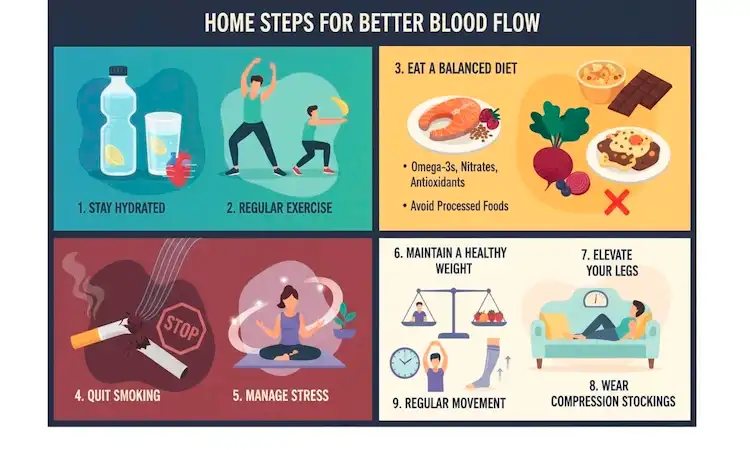
Home steps for better blood flow helps you feel more energetic, supports your heart, and plays a direct role in erections. If your circulation is sluggish, sex can feel unpredictable, morning erections may fade, and you might notice colder hands and feet, leg heaviness, or low stamina.
The good news is there are practical home steps for better blood flow you can start today. Some men notice small changes in days, and clearer improvements over a few weeks, especially when movement, sleep, food, and stress all move in the same direction. This isn’t a quick fix, it’s body maintenance.
Safety note: sudden chest pain, severe leg pain, one-sided weakness, or trouble speaking needs urgent care. Also, ongoing erectile problems can be an early sign of blood vessel issues worth discussing with a clinician.
Quick daily home steps for better blood flow (start today)
These are the “busy adult” actions that work because they target the basics: muscle pumping, blood vessel relaxation, and steady blood volume. Erections depend on healthy blood vessels and good signaling, so these steps help more than just your legs.
Move more without “working out”, walking, squats, and calf raises
Your leg muscles act like a pump. When they contract, they help push blood back toward your heart. When you sit still for hours, that pump goes quiet, and circulation slows.
Try this simple plan for the next 14 days:
- 10-minute walk after meals: It supports circulation and helps your body handle blood sugar better, which matters for blood vessel health.
Tip: Keep shoes by the door and set a timer. Ten minutes counts. - 1 to 2 sets of bodyweight squats or sit-to-stands: Squats are great, but a chair works fine. Stand up, sit down, repeat. This wakes up the biggest muscles in your body fast.
Tip: Do 8 to 12 reps before your morning shower, then again mid-afternoon. - 30 to 60 seconds of calf raises while brushing your teeth: Calves are small but powerful for circulation. Rise up on your toes, lower slowly, repeat.
Tip: If balance is shaky, hold the sink and go slower.
Also, break up long sitting. Aim for 2 minutes of movement each hour (walk the hall, march in place, do 10 sit-to-stands). If you want a deeper read on general circulation habits, Cleveland Clinic’s overview of ways to improve blood circulation naturally lines up well with this approach.
Warmth, hydration, and breathing to relax blood vessels
Think of blood vessels like adjustable hoses. Stress, cold, and dehydration can make those hoses tighten, which is the opposite of what you want for erection quality.
- Use warmth on purpose: A warm shower can loosen tight muscles and help you feel more relaxed. Warm socks can help if your feet run cold. A heating pad can be useful on tight hips or low back muscles, but never put heat on numb skin and don’t fall asleep on it.
Tip: Try 10 minutes of warmth in the evening, then follow it with light stretching. - Hydrate like it’s part of the plan: When you’re dehydrated, blood volume can drop, and your body may clamp down on circulation to protect vital organs.
Tip: Fill a large water bottle in the morning and aim to finish it by mid-afternoon, then top off again. Pale yellow urine is a good sign. - Do a simple breathing drill to downshift stress: Inhale through your nose for 4 seconds, exhale for 6 seconds, for 3 to 5 minutes. Longer exhales help calm the “fight-or-flight” signal that tightens vessels.
Tip: Do this once at your desk, and once before sex or bedtime.
One more practical call: avoid heavy alcohol on nights you want better performance. A drink or two may lower anxiety, but more than that often dulls arousal and worsens erections.
Home habits that improve circulation and support erections over time
Daily steps get the blood moving. Longer-term habits keep the lining of your blood vessels healthier, which supports nitric oxide, the chemical signal that helps arteries open for erections. Harvard Health has a clear summary of lifestyle strategies in 5 natural ways to overcome erectile dysfunction, and it matches what many clinicians recommend.
Eat for blood flow: simple plate rules and key foods
You don’t need a perfect diet. You need repeatable meals that support blood vessels most days.
A few simple “plate rules”:
- Half your plate vegetables (fresh or frozen). The fiber helps blood sugar and cholesterol, both tied to circulation.
- Swap refined carbs for whole grains (brown rice, oats, whole-grain bread). Steadier blood sugar is kinder to blood vessels.
- Choose olive oil and a handful of nuts for fats more often than butter or fried foods.
- Pick lean protein (fish, chicken, beans, Greek yogurt), and keep processed meats as an occasional item.
Foods often linked with better vessel function include beets, leafy greens, berries, citrus, garlic, and fatty fish (like salmon). On the flip side, lots of salt and ultra-processed foods can raise blood pressure and make blood vessel function worse.
A simple sample day: oatmeal with berries at breakfast, a big salad with chicken or beans at lunch, salmon with roasted vegetables and brown rice at dinner. If you want ideas focused on penile blood flow, this Health.com guide on natural ways to boost blood flow to the penis offers a helpful starting point.
Sleep, stress, and nicotine: the three biggest hidden blockers
If erections are inconsistent, these three are often the “quiet” reasons.
- Sleep: Poor sleep raises stress hormones and can reduce testosterone over time. Both can tighten blood vessels and lower desire.
Try: keep the same wake time, cool and dark room, and screens off 30 minutes before bed. - Stress: Chronic stress keeps your nervous system on high alert. That can limit blood flow where you want it most.
Try: the 4-in, 6-out breathing drill daily, and a short walk after work to break the stress loop. - Nicotine: This one is direct. Nicotine is a strong blood vessel constrictor, and that includes vaping and smokeless tobacco.
First step: pick one change you can hold for a week (delay the first nicotine use of the day, cut total use by 25%, or set a quit date). If you want support, a pharmacist or clinician can walk you through patches, gum, or meds.
Track progress and know when to get help
If you don’t track anything, it’s easy to miss small wins. A better approach is to watch for simple signs: warmer hands and feet, less leg heaviness, improved stamina, more frequent morning erections, and erections that start faster and stay firmer with less effort.
A simple 2 week checklist for better blood flow
Use this quick tracker. Don’t chase perfection, chase consistency.
| Daily check | Your target | Notes to watch |
|---|---|---|
| Walk time | 20 to 30 minutes total | After meals works best |
| Water | Steady intake (refill bottle 2 times) | Headaches and dark urine suggest low fluids |
| Bedtime routine | Same wind-down time | Fewer late screens helps |
| Erection quality | Note morning erections too | Look for gradual improvement |
If you can, take your blood pressure at home a few times per week. High blood pressure often has no symptoms, but it can hurt erection quality.
Red flags and medical checks that matter for erectile problems
See a clinician soon if ED is new, getting worse, or comes with chest pain, shortness of breath, leg pain with walking, numbness, or symptoms of diabetes (excess thirst, frequent urination, blurry vision).
Common checks are straightforward: blood pressure, cholesterol, and blood sugar (A1C). Some men may also need testosterone testing if symptoms fit (low libido, fatigue, loss of muscle).
If you’re considering ED meds, don’t self-prescribe. They can interact dangerously with nitrates used for chest pain, and a clinician should guide safe use.
Conclusion
The most effective home steps for better blood flow are simple and repeatable: daily movement that uses your legs, hydration and warmth to help vessels relax, better sleep, smarter food choices, and cutting nicotine. Start with two changes you can keep for the next 14 days, then add one more.
If erectile problems keep showing up, treat them as a health signal, not a personal failure. A basic checkup can uncover fixable issues, and improving blood flow supports more than sex, it supports your whole future.