


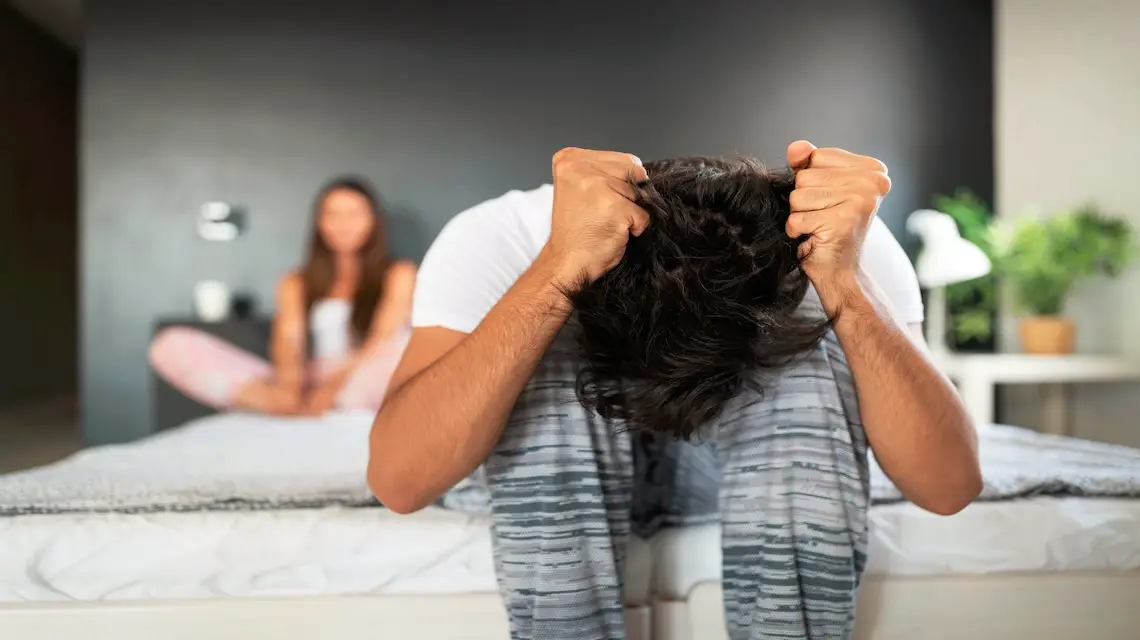

Ever noticed that your body can be ready for sex, but your mind won’t let it happen? Or you want it, but your erection shows up late, fades fast, or doesn’t show up at all. That disconnect is frustrating, and it can feel personal. Stress is one of the most common reasons this happens, even in people who are otherwise healthy.
In plain terms, how stress affects erections often comes down to your body shifting into “problem-solving mode,” which isn’t the same mode you need for arousal.The good news is that stress-related erection trouble is often fixable. Below, you’ll learn what’s going on in your body, how worry can keep the problem alive, a quick self-check, and when it’s smart to get medical help.
How stress affects erections inside your body
An erection isn’t just “turning on.” It’s a body-wide event that needs good blood flow, calm nerves, and enough mental space to feel turned on. Stress pushes those systems in the opposite direction.
When stress hits, your brain signals your body to get ready for action. That’s useful for deadlines, arguments, and emergencies. It’s not useful for sex, which works best when you feel safe, unhurried, and present.
Stress can show up as:
- slower arousal (it takes longer to get hard)
- trouble staying hard (you lose it mid-way)
- less desire (you’d rather sleep or zone out)
- erections that vary a lot (fine alone, tougher with a partner)
If you want a broad overview of common ED causes, including stress, the Mayo Clinic’s erectile dysfunction overview is a solid reference.
The stress response fights erections: adrenaline, tight blood vessels, and less blood flow
Think of stress like a car alarm that’s too sensitive. It goes off even when there’s no real danger. Your body releases stress chemicals (including adrenaline) to help you react fast. Heart rate rises, muscles tense, and blood flow gets prioritized for action.
Erections depend on relaxed smooth muscle and steady blood flow into penile tissue. Stress can tighten blood vessels and raise tension in the body, which makes it harder for that “fill and hold” process to work.
Real-life examples are everywhere:
- you’re rushing because the kids are finally asleep
- money worries are looping in your head
- work emails are still coming in
- you’re trying to “make it happen” to prove you’re okay
In those moments, your body isn’t broken. It’s responding exactly as it was designed to, just in the wrong setting.
Cortisol, sleep loss, and low energy can lower sex drive and testosterone over time
Short bursts of stress come and go. The bigger problem is stress that doesn’t quit. When stress becomes your default, sleep often suffers, and sleep is when your body resets.
Poor sleep can mean:
- lower energy and mood
- less interest in sex
- less reliable erections the next day
Over time, long-running stress and poor sleep can also affect hormone balance for some men, including testosterone, which may impact libido and sexual function. This doesn’t mean stress “ruins” you, it means your body may be running on empty. When you’re exhausted, arousal often becomes harder to access, even if attraction is there.
The mind-body loop: performance anxiety and worry can keep you from getting hard
Stress-related erection problems often come and go, which can make them even more confusing. One night is fine, the next night isn’t, and now you’re watching your body like a hawk. That monitoring is a big part of the loop.
When sex starts to feel like a test, your attention shifts from pleasure to “Am I hard yet?” That mental shift changes your body’s response.
For a helpful breakdown of the stress and anxiety connection, Healthline’s overview on stress, anxiety, and ED explains why mental pressure can create real physical effects.
Worry steals focus from pleasure and turns sex into a test
Arousal needs focus. Not perfect focus, but enough to stay connected to sensation, touch, and desire. Worry pulls you into your head, where you start grading your performance.
Common triggers include:
- a past erection problem that left you embarrassed
- a new partner and the pressure to impress
- stress after an argument (even if you “moved on”)
- feeling guilty about not wanting sex as often
The brain can’t fully chase pleasure while it’s scanning for danger or judging results. Your body picks up on that tension and responds with less arousal.
Avoiding sex can make stress-related ED worse over time
After a rough night, it’s normal to protect yourself. Some people avoid sex, others rush through it, hoping to get it over with before anything goes wrong. Both responses raise pressure.
The cycle often looks like this:
- one off night happens
- fear shows up before the next attempt
- you try to force an erection
- anxiety rises, erection drops
- you avoid sex or feel dread next time
A useful reframe is that erections aren’t an on/off switch. They’re more like a dimmer. Intimacy also isn’t only penetration. If you and your partner can stay connected through touch, oral sex, toys, or just making out, you keep safety and closeness in the picture, which helps erections return more naturally.
What to do next: quick self-check, stress fixes that help erections, and when to see a doctor
Stress is a common cause, but it’s not the only one. Erection changes can also signal blood flow problems, medication side effects, hormone issues, depression, heavy alcohol use, or chronic conditions like diabetes.
If you want a men’s health perspective on stress, anxiety, and sexual performance, this explainer from Healthy Male is worth a read.
Is it likely stress or something else? Signs to pay attention to
Use this quick self-check and track patterns for 1 to 2 weeks:
- Morning erections: Are they still happening sometimes, or mostly gone?
- Context: Is it only with a partner, or also when you’re alone?
- Timing: Did it start after a stressful event, conflict, or burnout stretch?
- Duration: Has it been a few weeks, or several months?
- Sleep: Are you getting enough, and is it good quality?
- Alcohol and substances: More drinking than usual, or using to “take the edge off”?
- New meds: Any recent changes (including antidepressants or blood pressure meds)?
- Pain or curvature: Any discomfort, numbness, or noticeable bending?
- Health factors: High blood pressure, diabetes, high cholesterol, smoking, or depression?
If erections changed suddenly, you have chest pain with exertion, or you’re noticing other symptoms, don’t chalk it up to stress and wait it out.
Simple stress and lifestyle moves that can improve erections within weeks
Small changes add up fast when stress is the main driver.
- Protect sleep: Keep a steady bedtime, cut late caffeine, and dim screens near bedtime.
- Move most days: A 20 to 30-minute walk helps mood, blood flow, and tension.
- Downshift before sex: Try 2 minutes of slow breathing (longer exhale than inhale).
- Go easy on alcohol: A drink might relax you, several often blunt arousal and erections.
- Reduce porn if it fuels anxiety: If you notice you compare yourself or need more intensity, take a reset.
- Plan sex when you have energy: Many couples do better earlier in the evening or mornings.
- Talk with your partner: A simple “I’ve been stressed, I want closeness without pressure” can change the whole tone.
- Get support for anxiety: Therapy, sex therapy, or coaching can help you stop the performance loop.
If you’re considering ED medications, talk with a clinician, especially if you have heart risks or take nitrates.
Conclusion
Stress can block erections through body chemistry (tension and blood flow changes) and through the mental loop of worry and performance pressure. If this sounds familiar, you’re not alone, and you’re not “broken.” A few weeks of better sleep, less pressure, and calmer setup before sex can make erections more reliable again.
If problems are persistent, started suddenly, or come with pain or other symptoms, get checked by a doctor. Treat it like any other health change. The most helpful mindset is simple: focus on safety, connection, and recovery, not perfection.
How Stress Affects Erections FAQs:
How can stress make it hard to get an erection?
Stress shifts your body into a fight-or-flight state. That can tighten blood vessels, raise muscle tension, and pull attention away from arousal, all of which can make erections harder to start or keep.
Stress can also change how you breathe (more shallow or fast). That may increase tension and make it tougher to stay present during sex.
Can anxiety cause erectile dysfunction even if I’m healthy?
Yes. Performance anxiety can interrupt the brain-to-body signals that help start an erection, even when your blood flow and hormones are fine.
A common pattern is, one difficult night leads to worry about the next time, and that worry becomes the main problem. The erection issue is real, but it’s being driven by anxiety rather than a physical blockage.
What’s the difference between everyday stress and chronic stress for erections?
Short-term stress might cause a one-off issue, especially after a rough day. Chronic stress tends to have a longer reach, it can affect sleep, mood, relationship connection, and desire, which can all lower erection quality over time.
If stress is constant, your body may spend less time in a relaxed state, which is the state that supports sexual response.
Does stress lower testosterone and affect erections?
Long-term stress can affect hormones, including testosterone, in some people. Low testosterone can reduce sex drive, and lower desire can make erections less reliable.
That said, testosterone isn’t the only factor. Many stress-related erection problems happen even when testosterone is in the normal range.
Why do I get morning erections but not during sex when I’m stressed?
Morning erections are often more automatic and less tied to thoughts, pressure, or relationship tension. Sex adds mental load, expectations, and distraction, which stress can amplify.
Having morning erections can be a helpful clue that blood flow and nerves are working, even if stress is blocking things during partnered sex.
Can stress medications affect erections?
Some medications used for anxiety or depression can affect erections or orgasm for certain people. Others don’t, and sometimes treating anxiety improves sexual function overall.
If you suspect a medication is involved, don’t stop it on your own. Ask your prescriber about dose changes, timing, or alternatives.
What are practical ways to reduce stress-related erection problems?
A few approaches often help, especially when used together:
- Lower the pressure: Focus on touch and pleasure, not “performance.”
- Improve sleep: Poor sleep makes stress and erections worse.
- Move your body: Regular exercise helps blood flow and stress response.
- Cut back on heavy alcohol use: It can worsen erections and anxiety.
- Try breathing or mindfulness: It can help you stay in your body during sex.
If you’re with a partner, a simple talk like, “I’m stressed and it’s affecting my body,” can reduce tension fast.
When should I see a doctor about erections and stress?
Consider getting checked if erection trouble lasts longer than a few weeks, shows up most of the time, or comes with other symptoms (low desire, pelvic pain, urinary changes, depression, or relationship distress).
Also get medical help right away if erection problems start suddenly after chest pain, shortness of breath, or new heart symptoms. Stress can play a role, but it’s smart to rule out medical causes, especially if you have diabetes, high blood pressure, or smoke.