




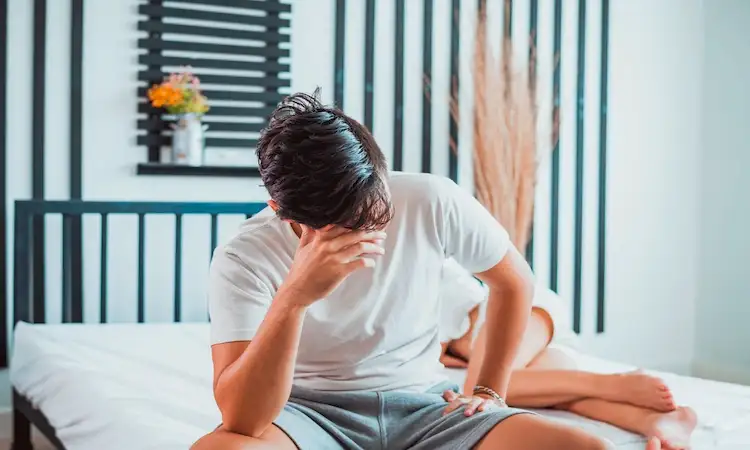
If sex has started to feel stressful, confusing, or “off,” it’s easy to wonder what’s going on. A lot of people land on two possibilities: performance anxiety or low libido. They can look similar from the outside, like avoiding sex, losing arousal mid-way, or feeling disconnected from your body, but they’re not the same thing.
When people say “performance anxiety,” they usually mean desire is present, but fear shows up and hijacks the moment. The mind starts scoring the experience like a test: Am I doing this right? Will my body cooperate? Will I disappoint them? Low libido usually means the baseline interest in sex is lower, even when you feel safe, calm, and connected.
This article gives you a practical way to spot which one is driving the problem, plus what to do next. And yes, they can overlap, sometimes in a frustrating loop. Everything here applies to all genders, orientations, and relationship types, whether you have a long-term partner, multiple partners, or you’re dating.
What each one feels like in real life (and why they get mixed up)
A helpful way to separate Performance Anxiety vs. Low Libido is to watch when the difficulty shows up: before sex begins, during sex, only with a partner, or even when you’re alone.
Performance anxiety often sounds like, “I want this, but I can’t relax.” You might feel turned on while flirting, kissing, or thinking about sex, then your brain suddenly shifts into problem-solving mode. It can happen with erections, orgasm, lubrication, pain-free penetration, or worries about how your body looks, smells, or moves. Sometimes the body responds at first, then “shuts down” as soon as you notice it and start monitoring it.
Low libido tends to sound like, “I care about sex, but I don’t feel pulled toward it.” People often describe an emotional wish to want it, without the physical or mental spark showing up on its own. You might agree to sex because you love your partner or miss closeness, but starting feels like effort. This can be true even with a partner you trust and find attractive.
They get mixed up because both can lead to avoiding sex. If you’ve had a few tense experiences, your brain learns to associate sex with pressure. Avoiding becomes a quick relief, and that relief can quietly reinforce the pattern.
Solo sex versus partnered sex can offer clues. Some people have little interest in either, which points more toward low libido or a broader life and health issue. Others can get aroused alone but freeze with a partner, which often points toward anxiety, relationship tension, or fear of being judged.
New partner versus long-term partner matters too. With a new partner, nerves and self-consciousness can spike. In a long-term relationship, stress, resentment, boredom, parenting fatigue, or routine can flatten desire. It’s not that one is “real” and the other isn’t, it’s that the context changes the body’s response.
Performance anxiety: desire may be there, but fear takes over
With performance anxiety, desire often shows up first, then gets crowded out by worry. Common thoughts sound like: What if I can’t get hard, what if I lose it, what if I don’t orgasm, what if I orgasm too fast, what if I can’t stay wet, what if my body doesn’t respond, what if they compare me to someone else, what if I look weird from this angle.
The more you chase a specific outcome, the easier it is to lose the thread of pleasure. Arousal can start, then drop once your attention shifts from sensation to “results.” That shift is powerful because arousal depends on feeling safe enough to be in your body.
Your body can signal anxiety in pretty classic ways: racing heart, tight jaw or shoulders, shallow breathing, sweaty palms, clenching your pelvic floor, and a sense of being distracted even when you want to focus. Some people describe it like trying to fall asleep while someone grades you.
For a plain-language rundown of common symptoms and triggers, see WebMD’s overview of sexual performance anxiety.
Low libido: the interest is low even when things are calm
Low libido is usually a lower baseline interest across situations. That might mean less spontaneous desire, fewer sexual thoughts, or not feeling motivated to initiate, even during low-stress weeks. It can be temporary (a rough month, a new medication, grief, postpartum recovery) or long-lasting.
Low libido is also not the same as not loving your partner. Many people with low desire feel affection, attraction, and commitment. They just don’t feel much internal push toward sex.
It also helps to know about responsive desire, which is common for many people. Responsive desire means you don’t start out wanting sex, but desire can grow after warmth, touch, emotional closeness, and low-pressure arousal. If you rarely feel “spontaneous” desire but can still enjoy sex once it’s underway, that might be a normal pattern, not a broken one.
A solid explanation of how performance worry can show up in the mind and body is also covered in Verywell Mind’s guide to sexual performance anxiety.
A quick self-check to tell the difference (without overthinking it)
You don’t need a perfect label to make progress. You just need a direction that fits your pattern. The goal of this self-check is simple: spot whether the main obstacle is fear and pressure, or low baseline desire, or both.
A few ground rules first:
- Track patterns for 2 to 4 weeks, not every hour. Think “weather report,” not “surveillance camera.”
- Keep consent at the center. Any plan that relies on pressure will backfire.
- If there’s pain, bleeding, or repeated tearing, treat that as its own problem that deserves care. Pain changes arousal fast, and it can create anxiety even if libido is fine.
During your tracking window, jot down brief notes after sexual moments (partnered or solo): what was the context, how stressed you were, whether desire was present, and whether worry showed up. Two sentences are enough.
Ask these 7 questions and look for patterns
- Do I feel desire before sex? If yes, but it disappears once things “start,” that often fits performance anxiety. If no most of the time, low libido may be leading.
- Does desire return when pressure is off? If you feel turned on when there’s no expectation (cuddling, massage, making out without “next steps”), anxiety may be part of the block.
- Can I enjoy sex once it starts? Enjoyment that kicks in after gentle build-up can fit responsive desire. If enjoyment stays low even with slow, kind pacing, it may point more toward low libido or a medical factor.
- Is the main problem fear of “failing”? If your thoughts fixate on erection, orgasm, lubrication, lasting long enough, or being judged, that’s classic performance anxiety.
- Do I get aroused alone but not with a partner? That pattern often suggests anxiety, relationship tension, or feeling watched. It can also reflect partner-specific dynamics (conflict, trust, or safety).
- Is there pain, dryness, numbness, or loss of sensation? That can reduce desire and create fear quickly. It also deserves medical attention, especially if it’s new.
- Did this start after a specific event? A stress spike, conflict, childbirth, illness, a medication change, a cheating event, a breakup, or a single “bad night” can all start a new pattern.
If your answers are split, that’s normal. Performance Anxiety vs. Low Libido is not always a clean either-or. Many people have a primary driver plus a secondary ripple effect.
For context on how anxiety disorders and stress can connect to sexual functioning, see Psychiatric Times on anxiety and sexual dysfunction.
Common overlap: when anxiety causes low desire, or low desire causes anxiety
This is the loop that keeps people stuck. One awkward experience happens, maybe an erection changes, orgasm doesn’t happen, sex is painful, or a partner seems disappointed. After that, your brain starts forecasting the same outcome. Forecasting creates anxiety. Anxiety reduces arousal. Reduced arousal confirms the fear. Then avoidance becomes the safest feeling option.
Over time, avoidance can look like low libido. You might not even notice the anxiety anymore because you stop getting close to the situations that trigger it. Or the reverse happens: libido drops for health or life reasons, then you start worrying about what it “means.” That worry adds pressure, which makes arousal even less likely.
A common term therapists use is “spectatoring,” which basically means watching yourself from the outside instead of feeling the moment from the inside. It’s like trying to dance while staring at your feet in a mirror. You’re still moving, but the ease is gone.
If avoidance has become a main coping strategy, the patterns described in this discussion of sex avoidance and anxiety may feel familiar.
What to do next: small changes that help, and when to get support
Once you have a best guess, pick a few low-pressure steps and test them for a month. Think of it like adjusting conditions for a plant. You don’t yell at it to grow, you change light, water, and soil. Sexual response works the same way.
The most useful mindset shift for both issues is dropping the idea that sex has to follow one script. Intercourse is not the only “real” sex. Orgasms aren’t the only marker of success. And taking a break from a specific activity is not failure, it’s strategy.
Partner communication matters here, even if you’re worried it’ll be awkward. You don’t need a big speech. You need a calm, honest headline and a plan that protects both people from pressure.
If it looks like performance anxiety: reduce pressure and rebuild confidence
Start by changing the goal from performance to pleasure and connection. For a short period, consider taking penetration or orgasm goals off the table. That can sound scary, but it often brings relief fast.
Slow things down on purpose. Use more lube than you think you need. Focus on sensations that don’t require “staying” in a narrow arousal window, like kissing, touching, oral sex, mutual masturbation, or simply naked cuddling.
Try a simple grounding pattern: inhale slowly, exhale longer than you inhale, soften your shoulders, and notice three physical sensations (warmth, pressure, texture). Anxiety pulls attention into the future. Sensation brings it back to now.
If porn comparison is feeding pressure, reduce it for a few weeks and see what changes. Many people notice their expectations relax, and they become more responsive to real-life pacing. Alcohol can also be tricky. A drink may lower inhibitions, but more than that often blunts arousal and sensation.
A short script can help:
“I’m into you, and I want us to have a good time. Lately I’ve been getting in my head and it messes with my body. Can we keep tonight low-pressure and focus on what feels good, not on a specific outcome?”
If anxiety is persistent or tied to shame, trauma, or relationship tension, working with a therapist can speed things up. A practical, relatable perspective is in Therapy Group DC’s article on performance anxiety during sex.
If it looks like low libido: check the big drivers (body, mind, relationship, life)
Low libido usually improves when you find the real drain on your system. Start broad, then get specific.
Common drivers include stress, poor sleep, depression, anxiety, hormonal shifts (postpartum, perimenopause, low testosterone), thyroid problems, chronic pain, diabetes, and medication side effects (SSRI antidepressants are a common one, blood pressure meds can be another). Alcohol and cannabis can also reduce desire or make arousal less reliable for some people.
Relationship factors matter just as much. Ongoing conflict, resentment, feeling unseen, lack of emotional safety, or a mismatch in initiation style can quietly lower desire. And sometimes it’s simpler: life is repetitive, and sex has become predictable, so your brain stops paying attention.
Two practical steps that are often underrated:
First, schedule intimacy time that’s not framed as a demand for sex. Put it on the calendar like protected time for closeness, with permission for it to be anything from making out to a shower together to a shared nap.
Second, increase nonsexual touch. When affection only shows up as a prelude to sex, it can create pressure for the lower-desire partner and frustration for the higher-desire partner. More everyday touch rebuilds safety.
If medication might be part of it, don’t stop on your own. Bring it to a clinician and ask about options. If your libido changed suddenly, or you have pain, bleeding, repeated dryness, numbness, or you can’t get aroused at all, get medical care. Also get support if there are major mood changes, new panic symptoms, or a sharp drop in functioning.
Conclusion
The simplest way to think about Performance Anxiety vs. Low Libido is this: performance anxiety is often “wanting but worrying,” while low libido is often “not wanting much,” even when things are calm. Real life is messier than a label, and the two can overlap, especially after a stressful or painful experience.
Use the self-check for a few weeks, then choose small changes that lower pressure and increase safety. Talk to your partner in plain language, with kindness and clear consent, and remember you’re on the same team. If the problem is persistent, sudden, painful, or tied to mental health or medication changes, bring in a clinician or therapist sooner rather than later. Nothing about this is shameful, it’s information, and you can work with it.