




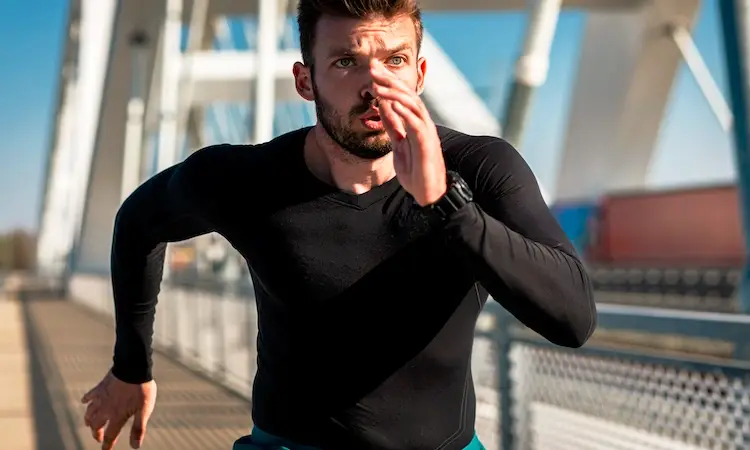
You know the feeling, you start a hike strong, then halfway up the climb your legs feel heavy and your breathing turns loud. Or you crush the first half of a pickup game, then spend the rest of it chasing your lungs. That drop-off isn’t just “being out of shape.” A big part of it comes down to VO2 max, a simple number that tells you how much oxygen your body can use when you’re working hard.
In plain English, VO2 max is your aerobic horsepower. It helps explain why some people can keep a steady pace for hours, recover quickly between bursts, and still have energy left for the rest of the day.
This guide breaks down what VO2 max is, how to measure it without guessing, what affects vo2 max male stamina in real life, and how to improve it safely with a simple 6-week plan.
VO2 max made simple, what it measures and why stamina depends on it
VO2 max isn’t a mystery lab term. It’s a snapshot of how well your body moves oxygen from the air to your working muscles, then uses it to create energy. If that oxygen pipeline is wide and efficient, you can do more work before you hit that “I’m cooked” feeling.
Think of the oxygen delivery chain like a supply route:
- Lungs pull oxygen in.
- Blood carries oxygen like delivery trucks.
- Heart is the pump that keeps the trucks moving.
- Muscles unpack oxygen and turn it into usable energy.
When VO2 max goes up, it usually means several parts of that chain improved. Your heart can push more blood per beat, your blood volume may increase, and your muscles get better at using oxygen. That’s why VO2 max often tracks with the kind of stamina people notice: holding a stronger pace, climbing stairs without getting winded, and bouncing back faster after hard efforts. For a clear, plain-language explanation of why VO2 max matters, see VO2 max explained for health and endurance.
Here’s the key: VO2 max doesn’t just help athletes. It shows up in everyday energy. Higher aerobic capacity can mean you finish a long day less drained because routine activity costs you a smaller percentage of your max.
Still, VO2 max isn’t the only piece of stamina. Long-lasting energy depends on other parts too:
- Muscle endurance (your legs can be aerobically fit but still “burn out”)
- Fueling (low carbs can make even fit people fade)
- Sleep and stress (both can wreck recovery and effort tolerance)
But VO2 max is a strong anchor metric because it reflects the size and efficiency of your whole aerobic system. If you want one number that connects fitness to “all-day power,” this is a solid place to start.
VO2 max vs endurance, the difference between peak power and how long you can hold it
VO2 max is your ceiling. Endurance is how close you can live near that ceiling without blowing up.
A simple analogy helps: engine size vs gas mileage. VO2 max is engine size, it’s the top output you can produce aerobically. Endurance is gas mileage and driving habits, it’s how long you can keep moving at a strong speed before you have to slow down.
You can have a decent VO2 max and still struggle in long events if you can’t hold a steady “comfortably hard” pace. On the flip side, you can have average VO2 max but strong endurance if your body is efficient and well-trained at easier intensities.
That’s where “thresholds” come in, without the textbook talk. You have an easy pace where you can talk, and a harder pace where talking becomes short phrases. Better endurance often means you can go faster before that hard line shows up.
What a “good” VO2 max looks like for stamina, and why it changes with age
“Good” depends on age, genetics, training history, and even how the number is measured. Lab tests, wearables, and field tests won’t always match. Use ranges as context, not a verdict.
Broadly, adult men often land somewhere in the 30s to 50s mL/kg/min, with higher values more common in trained runners, cyclists, and field-sport athletes. VO2 max tends to decline with age, but consistent training can slow that drop a lot.
If you want a simple reference chart to compare by age group, this VO2max norms table lays out common categories. Treat it like a map, not a grade.
How to measure VO2 max in real life, lab tests, wearables, and simple field checks
Measuring VO2 max can be precise, convenient, or cheap. Pick the option you’ll actually repeat, because one reading matters less than the trend.
There are three common routes:
Lab testing is the most accurate. It measures oxygen in and carbon dioxide out while effort increases. Wearables estimate VO2 max based on heart rate and pace (or cycling power). Field tests use time trials or step tests to approximate aerobic capacity.
No matter which method you choose, timing matters. VO2 max data gets messy when your body is under extra stress. Measurements can look worse (or oddly better) when you’re dealing with poor sleep, illness, dehydration, extreme heat, altitude changes, or new medications. Even a hard leg day can change your heart rate response enough to skew a watch estimate.
A practical rule: test under similar conditions, on similar terrain, at a similar time of day. Then compare your number every 4 to 8 weeks. For a deeper look at measuring outside the lab, this guide on testing VO2 max beyond the lab is a useful primer.
Lab VO2 max testing, what happens, what you get back, and who should consider it
A lab VO2 max test usually looks like a treadmill or bike “ramp” test. You wear a breathing mask, sometimes a heart monitor, and the effort increases every minute or two until you can’t continue. It’s hard, but it’s controlled and supervised.
You typically get back:
- A VO2 max value (often in mL/kg/min)
- Max heart rate observed during the test
- One or two threshold markers (often called ventilatory thresholds)
Lab testing makes sense if you’re building a serious training plan, you love accurate data, or you’ve got unexplained fatigue and want cleaner answers. If you have a history of heart or lung issues, talk with a clinician before doing maximal testing. Many sports medicine clinics also offer graded exercise tests for safety-focused screening.
Wearable VO2 max estimates, how to use them without getting fooled
Most watches estimate VO2 max using heart rate plus speed (running) or power (cycling). The idea is simple: if you can hold a faster pace at a lower heart rate, your aerobic fitness is probably improving. The catch is that heart rate is sensitive to sleep, stress, heat, caffeine, hydration, and even a snug (or loose) sensor.
Best practices keep the estimate useful:
- Use steady outdoor runs when GPS is reliable, or use cycling power if you have a power meter.
- Wear the sensor snug, and consider a chest strap for cleaner heart rate data.
- Compare similar routes and similar conditions.
- Track a 4 to 8-week trend, not daily swings.
- Expect strength training days to make the estimate look worse sometimes, that’s fatigue, not lost fitness.
If you’re curious how wearables stack up against lab testing, this article on VO2Max lab test vs device estimates gives a real-world comparison mindset.
What drives VO2 max male stamina, the biggest levers you can control
When people search for vo2 max male stamina, they often want one trick. The truth is less exciting and more empowering: the biggest drivers are habits you can repeat.
Men can still have a low VO2 max if they’re sedentary, sleep poorly, or train in a way that never builds an aerobic base. The good news is that improvement is realistic at almost any age, especially in the first 8 to 16 weeks of consistent work.
Here are the levers that usually matter most:
- Training consistency: Three to five sessions per week beats one heroic workout.
- Aerobic base volume: Easy work teaches your body to use oxygen with less strain.
- Short hard efforts: Brief high-intensity work pushes your ceiling up.
- Body composition (performance-focused): Carrying less non-working mass can raise relative VO2 max, but chasing weight loss at the expense of fueling often backfires.
- Sleep: Poor sleep raises heart rate, hurts recovery, and makes hard sessions feel harder.
- Stress and downtime: Chronic stress can flatten training response, even with “perfect” workouts.
- Recovery basics: Easy days, nutrition, hydration, and rest keep the engine improving instead of stalling.
For a straightforward definition of VO2 max and why it connects to fitness, Polar’s explainer on what VO2max means is a clean reference.
Training habits that move the needle, easy base work plus smart hard sessions
Two types of training move VO2 max and stamina for most people.
First is lots of easy work, often called Zone 2 style training. You should be able to breathe through your nose some of the time and speak in full sentences. This builds the foundation that keeps you steady for long efforts, and it also helps you recover between harder bursts.
Second is one or two short hard sessions per week. These workouts challenge your ability to use oxygen at high rates. They’re not long, and they shouldn’t leave you wrecked for three days. A good hard session feels controlled, like you could do one more rep if you had to.
Progress matters more than pain. Add time or intensity slowly, warm up well, and keep at least one easy day between hard days. Consistency beats “killer workouts” every time.
Sleep, fueling, and recovery, the boring stuff that protects your stamina
Stamina falls apart when recovery gets ignored. The fix is basic, but it works.
Aim for a regular sleep schedule and enough total sleep that you don’t need willpower to function. Eat enough on training days, especially carbs if you’re doing intervals or longer sessions. Get protein in consistently to support muscle repair. Hydrate earlier than you think you need to, and don’t try to “sweat out” fitness.
Common stamina killers show up fast:
- Under-eating while training hard
- Too much alcohol on nights before workouts
- Hard sessions stacked back-to-back
- Living in a constant stress response
If you want practical training ideas that tie VO2 max work to endurance, Health.com’s guide on how to increase VO2 max aligns well with the basics above.
A simple 6-week plan to build all-day power safely (plus mistakes to avoid)
This plan is meant to be repeatable. It’s not a test of toughness. The goal is to raise your aerobic ceiling while making your “normal” pace feel easier.
Pick 3 to 5 training days per week based on your life:
- 3 days/week: great for beginners, busy schedules, or return-to-training.
- 4 days/week: a strong middle ground for most people.
- 5 days/week: best for experienced trainees who recover well.
Keep the first 2 weeks conservative. Weeks 3 and 4 are where you add a little volume or tighten the quality. Weeks 5 and 6 are where you stay consistent and let the gains show up.
Check progress without obsessing over the number. Watch for signs like lower heart rate at the same pace, faster recovery after hills, and more energy later in the day. Re-test VO2 max after 6 weeks using the same method and conditions.
Weekly template you can repeat, 2 easy days, 1 long easy day, 1 hard day, and optional strength
Here’s a simple week you can repeat for 6 weeks:
- Day 1, Easy: 30 to 45 minutes at easy talk pace.
- Day 2, Strength (optional): 20 to 35 minutes, legs, hips, and core (squats or split squats, hinges like RDLs, calf raises, rows, planks).
- Day 3, Easy: 30 to 50 minutes easy, keep it comfortable.
- Day 4, Hard (VO2-style): warm up 10 to 15 minutes, then 4 x 3 minutes hard with 3 minutes easy between, cool down 10 minutes.
- Day 5, Off or short easy: walk, mobility, or 20 to 30 minutes very easy.
- Day 6, Long easy: 45 to 90 minutes easy, stay relaxed.
- Day 7, Strength (optional) or rest: short strength session or full rest.
Beginner swap: If the hard workout feels like too much, do 6 to 10 short hill repeats of 20 to 30 seconds with full easy walking recovery. It’s still a strong aerobic signal, and it’s often easier on the brain.
Strength supports stamina because better mechanics and stronger tissues can improve movement economy and reduce injury risk. That helps you train more weeks in a row, which is where endurance really builds. For more interval ideas that fit cycling and cardio work, Bicycling’s guide to HIIT workouts for VO2 max is a solid reference.
Common VO2 max traps that wreck stamina, going too hard, skipping easy days, and ignoring warning signs
Most plans fail for the same reasons: people turn every day into a test.
Common traps to avoid:
- Chasing max effort every workout
- Increasing volume too fast (more than about 5 to 10 percent per week)
- Skipping warm-ups, then “racing” the first interval
- Ignoring shoe wear, poor running form, or a bad bike fit
- Not eating after training, then feeling flat the next day
- Training through pain instead of adjusting early
Take warning signs seriously. Stop and get help if you have chest pain, fainting, unusual shortness of breath, or a heart rhythm that feels wrong. Rest is also a skill.
Conclusion
VO2 max is a simple metric with a strong connection to all-day stamina, because it reflects how well your body moves and uses oxygen. Still, the number matters most as a trend, not as a one-time score, and your daily habits decide whether it rises.
Pick one measurement method you trust, follow the 6-week structure, and keep most sessions easy enough to repeat. If you’re focused on vo2 max male stamina, the fastest win usually comes from consistency and recovery, not suffering.
Next step: choose a baseline test this week (lab, wearable trend, or field test), schedule three workouts, then re-test in 6 weeks under the same conditions.